
A screen covers only part of the tub
Unlike a full sliding enclosure, many bath screens protect the shower end while leaving a broad open entry. The result can feel spacious and simplify access.
Partial coverage also means splash control depends heavily on panel width, showerhead direction and the user’s routine. It should not be represented as completely watertight.
Open access
A partial screen leaves more of the tub edge open than a full sliding enclosure.
Hinged option
Can move for access and cleaning but needs clearance and secure wall support.
Splash control
Panel width, tub rim and spray direction determine practical containment.
Finished measurement
Glass size follows the completed tile and tub geometry.
Choose fixed or hinged movement
A fixed screen has fewer moving parts and a stable relationship to the tub. A hinged panel can move for entry or cleaning but needs clearance, reliable support and controlled stops.
The panel should not strike faucets, toilets, vanities or sloped ceilings. Confirm both the normal position and the full movement path.
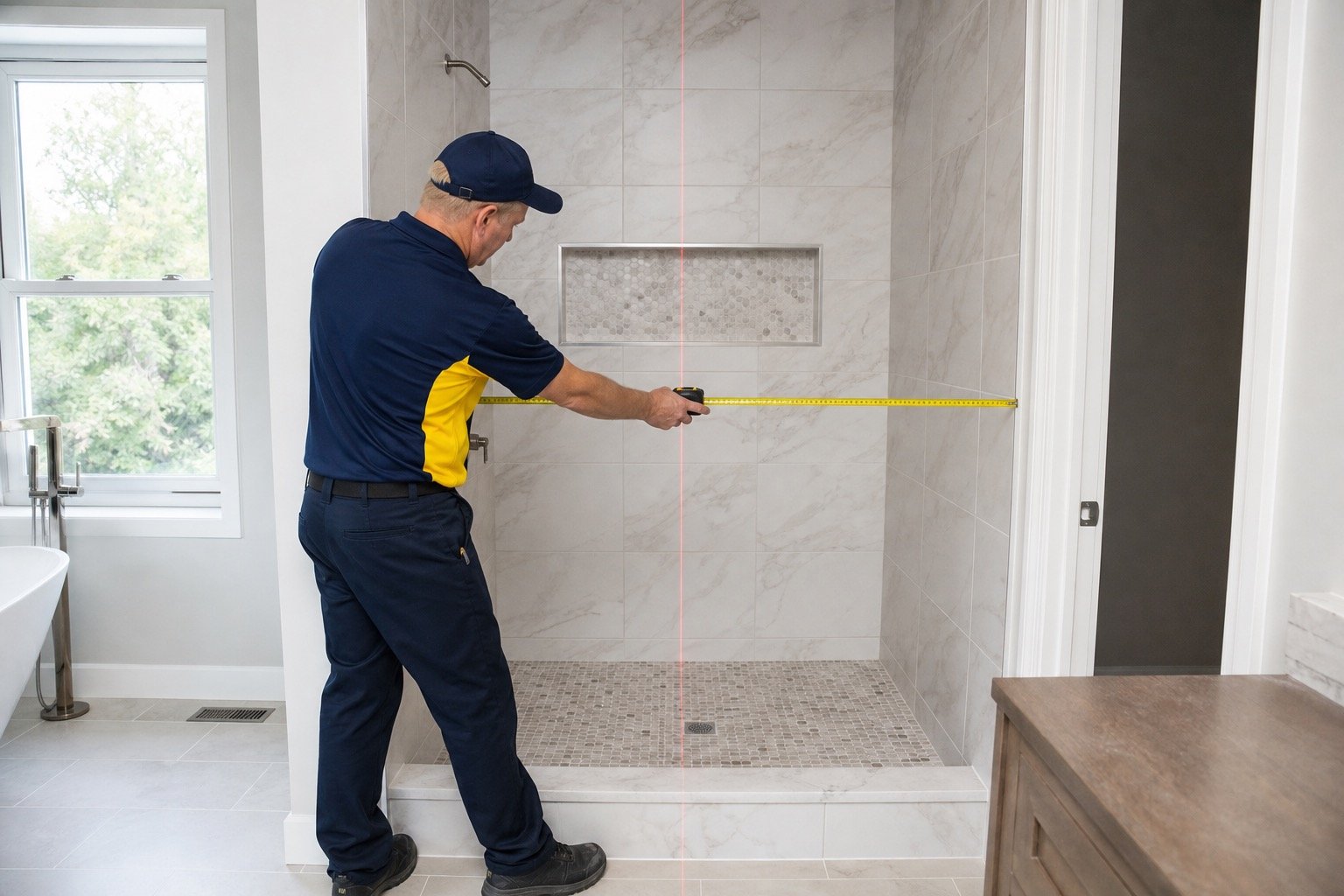
Measure after finishes are complete
Tile, tub level and wall plumb determine the final glass shape and hardware positions. Final measurement should follow completion of the surfaces that the glass meets.
Use suitable safety glass and project-specific hardware. Do not drill or anchor before wall construction and concealed services are understood.
Bring these questions into the design
- Is partial tub coverage acceptable?
- Can a hinged panel move without collision?
- Where is wall support available?
- Does the shower spray point toward the open edge?
