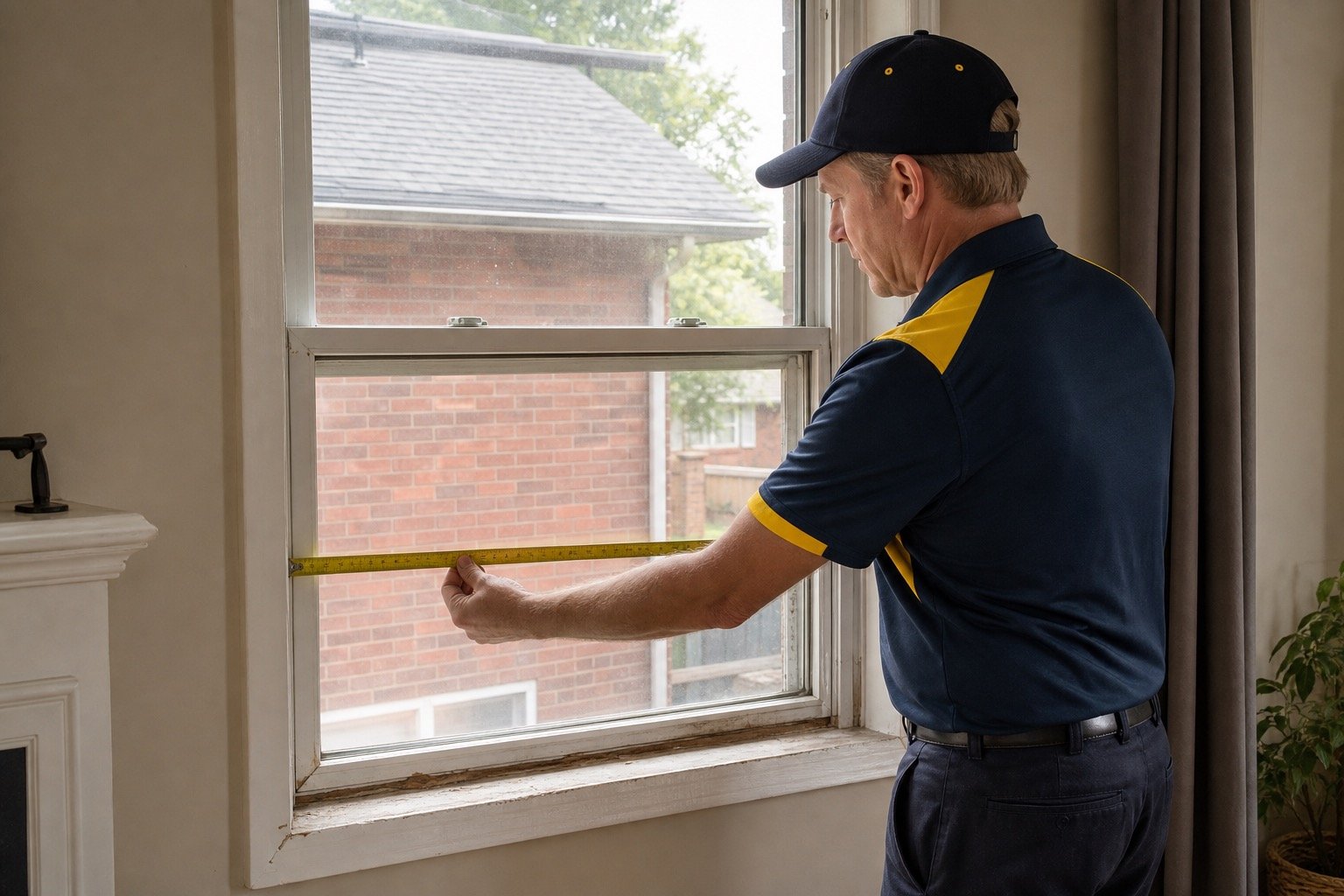
Operation problems can reveal frame distortion
Sashes that bind, locks that barely engage and uneven gaps may indicate that the frame is out of square or over-fastened. Hardware adjustment can help only when the underlying frame remains suitable.
A window that operated properly and then changed may also have settling, moisture or component wear. Diagnosis should separate installation alignment from a failed operator or balance.
Binding sash
May indicate frame distortion, poor support, hardware wear or accumulated debris.
Misaligned lock
Shows that sash and frame relationships are no longer meeting as designed.
Recurring draft
Can involve weatherstripping, frame perimeter seals or nearby wall leakage.
Water staining
Requires tracing the source rather than simply covering the visible interior joint.
Drafts and water need different investigations
Air movement may come through weatherstripping, around the frame or from another part of the wall. Water can enter above or beside the opening and appear at the sill, so the visible stain is not always the entry point.
Heavy caulking over the symptom can conceal drainage or delay the problem without correcting it. Review exterior interfaces, sill condition and interior air seals systematically.

Finishing details often provide clues
Cracked caulking, loose trim, compressed frames and blocked drainage openings deserve attention. Uneven interior extensions can also suggest that the opening or installation was not planned carefully.
Document when the symptom occurs and photograph the complete opening. That evidence helps determine whether focused adjustment, perimeter repair or a broader replacement assessment is appropriate.
Confirm these details before work begins
- Did the symptom exist from the first day?
- Does it change with wind or temperature?
- Are drainage paths open?
- Is the frame square and securely supported?