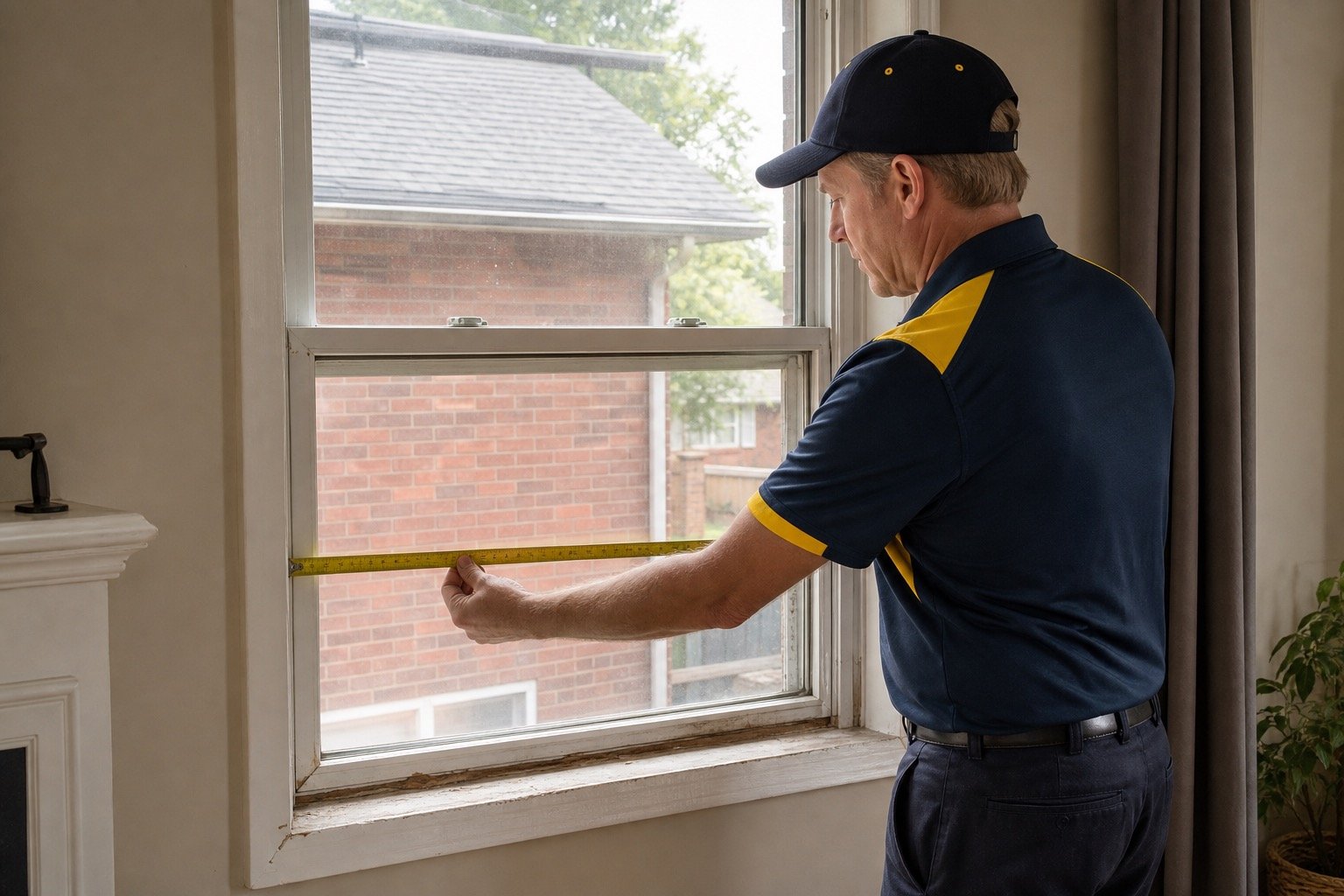
The opening has to be ready for the new unit
Removal may reveal soft wood, irregular framing, old sealants or missing water-control details. Those conditions should be identified before the new frame is concealed by trim.
The sill must support the window without trapping water. The frame needs room for adjustment, but oversized gaps and improvised packing can make long-term sealing more difficult.
Opening condition
Sound framing and a prepared sill provide a stable base for the new window.
Frame alignment
Shims and fasteners keep the unit true so sashes and locks operate consistently.
Air control
Insulation and interior seals limit uncontrolled air movement around the frame.
Water control
Flashing, sill details and exterior finishes direct incidental water back outside.
Square, level and plumb affect daily use
A frame that is twisted or over-fastened can make sashes bind and locks miss their keepers. Correct shimming and fastening hold the unit securely without distorting it.
After installation, every operating section should open, close and lock smoothly. Screens, drainage paths and removable components should also be checked before the handoff.

The perimeter must manage both air and water
Interior air sealing and exterior water shedding do different jobs. Exterior caulking alone is not a complete installation plan, and drainage openings should never be blocked.
Flashing and trim details vary with brick, siding, stucco and existing frames. The quote should identify the intended scope so product installation and surrounding repair work are not confused.
Confirm these details before work begins
- Is this insert or full-frame replacement?
- How will hidden deterioration be handled?
- What interior and exterior finishing is included?
- Who completes the final operation and seal check?
