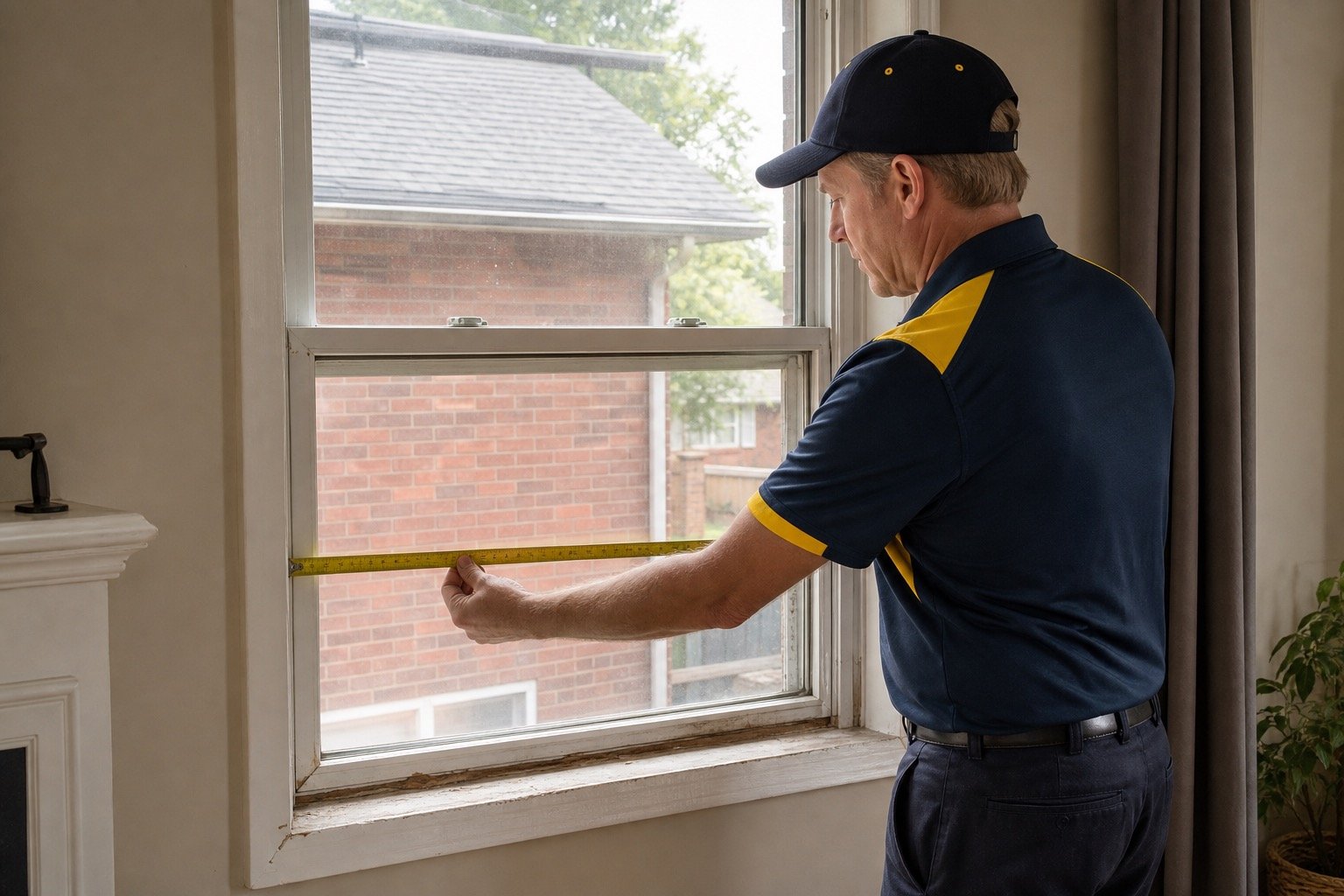
Clear the interior working area
Remove fragile items, plants and small furniture from the immediate area. Take down window coverings when requested and make sure cords, brackets and electronics are out of the work path.
Create a clear route from the entrance to each room. Large windows may require more turning space, and installers need a safe place for tools and temporary protection.
Furniture and coverings
Clear the opening and remove fragile or obstructing items as requested.
Access route
Provide enough room to carry windows safely from the entrance to the work area.
Pets and children
Arrange a separate secure space away from tools and temporarily open walls.
Exterior clearance
Move obstacles and identify difficult grade, landscaping or shared access conditions.
Check the exterior approach
Move vehicles, patio furniture and movable planters that block the opening. Trim only the vegetation discussed with the installer, and identify irrigation, electrical or other hidden services nearby.
Upper-floor work, narrow side yards and sloped ground may require ladders, staging or special access. Those conditions should be reviewed before the crew arrives.

Plan for the household
Children and pets should stay outside active work zones. Openings, glass, tools and cords can create hazards even when the crew is working carefully.
Ask how long rooms may be affected, what dust protection is included and whether alarms or home-office schedules need coordination. Keep final decisions and contact information available during the installation.
Confirm these details before work begins
- Who removes blinds and curtains?
- How much interior protection is included?
- Where can materials and tools be staged?
- Who should the crew contact if a hidden condition appears?
