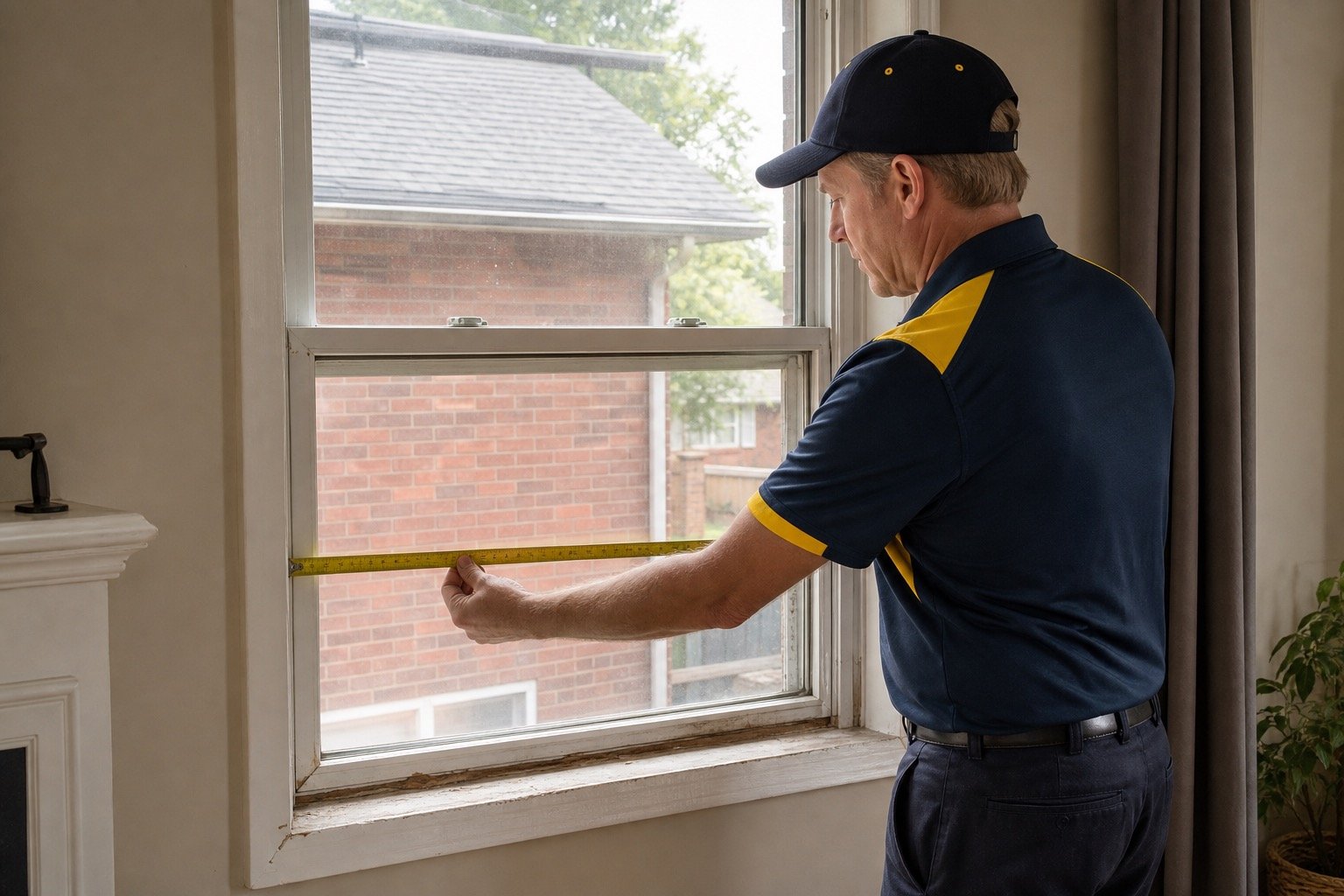
Look for consistent gaps and smooth movement
Open and close each sash slowly. Resistance at one point, a frame that appears bowed or locks that need force can indicate alignment problems.
Compare the spacing around the sash. Uneven reveal lines do not prove the cause, but they provide useful evidence when combined with operation and installation history.
Operation
Binding, dropping or forced locking can indicate alignment or hardware concerns.
Air movement
Recurring drafts may involve sash seals, frame perimeter work or the adjacent wall.
Moisture
The location and weather conditions help distinguish condensation, leakage and seal failure.
Finishes
Separated trim, failed caulking and obstructed drainage can reveal incomplete perimeter work.
Observe weather-related symptoms
Note the wind direction and temperature when a draft is felt. For water, photograph the first visible moisture before wiping it away and record whether the problem occurs during wind-driven rain or snow melt.
Condensation on the room-side glass may relate to indoor humidity and glass temperature, while moisture between panes indicates a sealed-unit issue. These conditions should not be treated as the same failure.

Review the perimeter without damaging it
Check for separated caulking, loose trim and blocked exterior drainage openings. Do not drill, foam or seal over unfamiliar gaps before understanding their intended function.
If the window is under warranty, gather the contract, product information and installation photographs. A clear timeline makes it easier to separate product, installation and maintenance responsibilities.
Confirm these details before work begins
- Do the sashes move and lock without force?
- When do drafts or water appear?
- Is moisture on the surface or between panes?
- What documentation remains from the installation?
